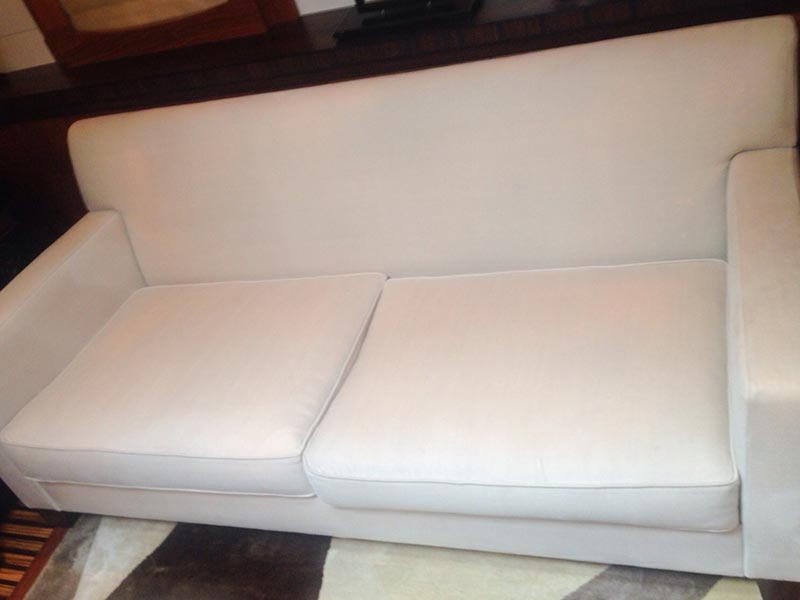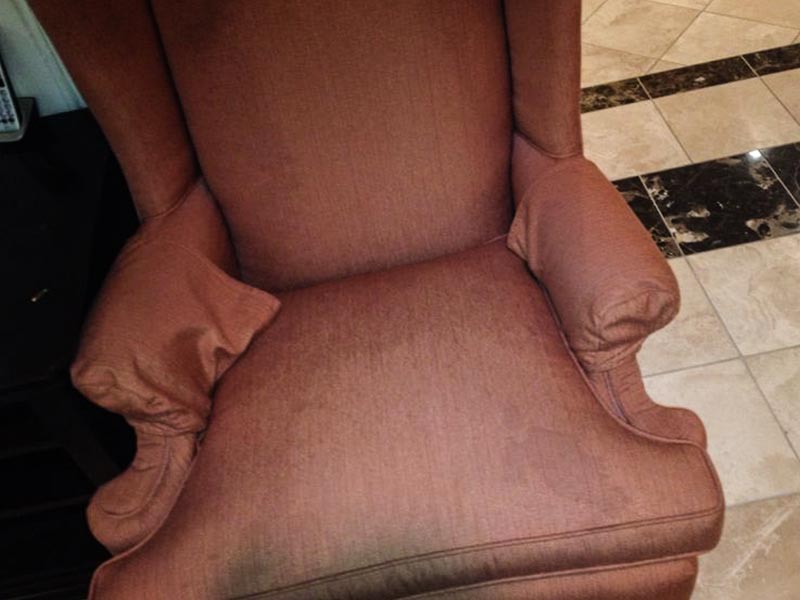
A light-colored sofa can look perfectly clean until someone notices a faint blue shadow on the seat cushion. At first, it may resemble ordinary dirt or a small stain. But sometimes, the source is something as simple as a favorite pair of dark jeans.
Dark denim can transfer color onto light upholstery through repeated contact and friction. This process, known as dye transfer, can happen even when the jeans are dry and the sofa has never been exposed to a spill.
Fort Lauderdale's humid weather creates more chances for denim to be slightly damp from perspiration or a passing rain shower, which can encourage dye transfer from some fabrics. On beige, cream, or white sofas, the resulting blue cast is easy to spot.
The challenge is that denim dye transfer is different from ordinary surface dirt. Removing it may require a more careful approach, and some discoloration can be difficult or impossible to reverse.
The safest response is usually restraint: understand why the blue cast formed, recognize what the fabric can tolerate, and avoid turning a visible mark into permanent color or texture damage.
Dark blue and black jeans get their color from indigo or other dyes. When denim rubs against upholstery, loosely held color can move onto the surface, a friction-driven process often called crocking. A person shifting or standing up from a cream sofa creates repeated contact at the seat and front edge, so a faint cast may build before anyone notices it.
New, dark, or minimally washed jeans are common culprits because they may retain more transferable dye, although older denim can cause the same problem. Perspiration, damp clothing, and humid conditions can increase transfer from some fabrics. That is why the resulting blue or gray mark should not be treated like ordinary household dirt.
Light upholstery does not all respond the same way. A small amount of blue dye creates sharp contrast on white or beige fabric, while it may be nearly invisible on a darker sofa. Tight weaves and protective finishes may resist transfer better than textured or absorbent fibers, where color can settle into the surface.
Consider two sofas in a Fort Lauderdale living room after someone comes in from a brief rain shower wearing dark denim. A smooth, light synthetic surface may show a more defined blue mark, while a textured woven fabric can trap color between its fibers. The same exposure can therefore call for different cleaning limits, even though damp clothing was the shared trigger.
The fabric's protective finish and manufacturer's care instructions are just as important as its visible appearance.
Start with the care label and determine whether the upholstery is natural, synthetic, blended, or protected by a finish. That information sets the safe limits for moisture, agitation, and cleaning chemistry. A general stain remover can lift the sofa's own color or alter its texture before it removes the denim dye.
Blue denim marks can look like gradual dirt buildup, but the materials behave differently during cleaning. Loose soil and body-oil residue may respond to suitable upholstery cleaning, while transferred textile dye can bond with or settle within the sofa fibers. Separating that color without disturbing the upholstery's own dye or finish is the harder problem.
| Upholstery Problem | Common Appearance | Cleaning Considerations |
|---|---|---|
| Denim dye transfer | Blue or gray-blue marks where jeans contact the sofa | May require specialized dye transfer stain removal |
| Everyday surface soil | General dullness or gray buildup | May respond to suitable upholstery cleaning |
| Body oil buildup | Darkened contact areas, sometimes with a greasy appearance | Requires assessment of oils and fabric compatibility |
| Permanent color damage | Faded, bleached, or uneven original color | Cleaning cannot restore lost dye |
Placement is a useful clue: denim transfer often develops on seat cushions, front edges, and other areas that repeatedly contact clothing. It is not proof on its own, since a blue mark may contain transferred dye, another substance, or a mix of residues.
A careful spot test should not produce color loss, texture changes, or a spreading ring. If any of those appear, stop rather than escalating to a stronger product.
Discovering a blue stain on a light sofa can be frustrating, particularly when the furniture is relatively new.
The temptation may be to scrub the affected area immediately or apply a strong household stain remover.
Unfortunately, aggressive treatment can make the problem worse.
Repeated rubbing may spread transferred color across a larger area or damage the surface texture.
Some upholstery fabrics are particularly sensitive to friction, and excessive brushing can create permanent changes in their appearance.
A cleaner designed for laundry or hard surfaces is not automatically safe for furniture.
Bleach, strong solvents, and unsuitable detergents can affect the upholstery's original color, protective coating, or fiber structure.
Even products marketed for upholstery stain removal may not be compatible with every fabric.
Applying excessive water can lead to spreading, water marks, or moisture entering the underlying cushioning.
Before attempting any household treatment, check the furniture manufacturer's care label and cleaning instructions.
If the approved cleaning method is unclear, avoid experimenting with multiple products.
Cleaning the sofa without considering the jeans may allow the blue marks to return.
Following the denim manufacturer's washing instructions and avoiding prolonged contact between dye-prone jeans and light furniture can help reduce future transfer.
Washing new dark denim before wearing it may reduce excess dye, but it does not guarantee that color transfer will stop completely.
Professional upholstery cleaning may improve some denim dye stains, but results depend on the fabric and the extent of the color transfer.
Before an appointment, avoid applying another product and note any cleaners already used. Residue from several products can spread the blue cast, create rings, or limit the next safe option.
The treatment must be compatible with the original fabric dye and finish.
UCM Upholstery Cleaning provides professional cleaning for sofas, sectionals, chairs, and other upholstered furniture.
Our team provides professional upholstery cleaning in Fort Lauderdale and selects an appropriate treatment based on the furniture's condition and cleaning requirements.
For certain fabrics, professional cleaning may help reduce transferred dye or improve the appearance of affected areas.
However, denim dye transfer can be more difficult to remove than ordinary surface soil.
Some transferred dyes may resist cleaning, and attempting increasingly aggressive treatments can create greater damage than the original mark.
Improvement may be uneven when the dye has moved beyond the original contact spot, so the surrounding cushion may need cleaning for a more consistent appearance. A clear stopping point also matters when additional treatment risks changing the sofa's original color or texture.
The goal is not simply to remove the visible blue color at any cost. It is to improve the furniture's appearance without compromising the original upholstery.
New or dark denim can contain dye that transfers through repeated contact and friction. This is especially noticeable on light-colored furniture.
Sometimes. Results depend on the upholstery material, type of transferred dye, age of the mark, and previous cleaning attempts. Complete removal is not always possible.
Washing dark jeans according to the manufacturer's instructions may reduce excess dye. However, some denim can continue transferring color after several washes.
Professional treatment may improve certain dye transfer stains, but not every upholstery material or transferred color responds successfully. An assessment is recommended before treatment.
Dark jeans can leave visible blue marks on light upholstery even without an obvious spill.
The problem develops when clothing dye transfers onto furniture through contact and friction, sometimes with moisture contributing to the process.
For Fort Lauderdale homeowners, recognizing the difference between denim dye transfer and ordinary dirt can prevent unnecessary cleaning attempts.
Checking fabric care instructions, taking precautions with new dark denim, and choosing material-appropriate cleaning methods can help protect light-colored furniture.
Understanding the source of the blue marks is the first step toward selecting a treatment that is both effective and safe for the upholstery.
If dark jeans have left blue marks on your sofa or chairs, UCM Upholstery Cleaning can assess the affected furniture and discuss suitable cleaning options.
Call 954-900-6686 to ask about upholstery cleaning in Fort Lauderdale and request a free estimate.